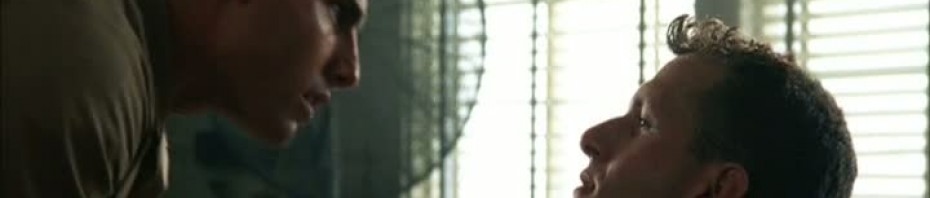
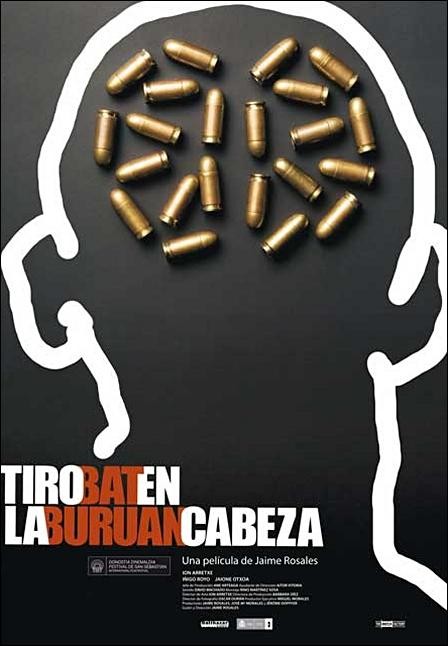
In FIPRESCI award-winning director Jaime Rosales’s own words, his latest film is “really difficult for the audience.” Citing inspiration from the silent era of cinema while making a metaphorical statement on the “noise, not words” of Spanish politics, Rosales pushes the boundaries of filmmaking with a study in audience patience by essentially delivering a silent film – just two words are uttered in the 84-minute running time – in which, as Rosales readily admits, “nothing happens.”
From the Archives: Man on Wire (2008)
23 FebThere is a moment toward the end of James Marsh’s documentary feature, “Man on Wire,” when our high-wire impresario protagonist Philippe Petit utters the words: “Life should be lived on the edge of life” – at once so perfectly and profoundly encapsulating the very essence of this mesmerizing story of the power of dreams and the pursuit of the impossible. Upon his arrest after completing the “artistic crime of the century” by tightrope walking between the newly constructed twin towers of the World Trade Centre in August 1974, Philippe recounts how he was met with one question: “Why?” His simple retort – “Why? There is no why,” cheekily dismissing the question as “very American” – portrays a virtuous frontier spirit that is as admirable as it is foolhardy. That said, Philippe is a rare breed, and his enthusiasm for his performance is little diluted 34 years on and that in part is what makes his story so fascinating and relevant.
THE LOWDOWN WEEKS 6&7
23 FebWhere there is wheat there is inevitably chaff. And February’s cinematic harvest has produced an inordinate amount of chaff, as evidenced by the dross currently being served up at the box office. It’s a veritable graveyard out there at the moment and unfortunately it’s one that is populated by the likes of Danny Dyer, annoying kids with tambourines and Nic Cage’s flaming head.
From the Archives: The Eye (2008)
22 FebYou could be forgiven for thinking that the film industry had run out of ideas. The noughties have seen studios once again embracing sequels and trilogies as if they were going out of fashion. Even undeserving pictures such as Fantastic Four and Bruce Almighty have been afforded the follow up treatment, whilst long defunct series such as Die Hard, Rambo and Rocky have all been reinvented for 21st century audiences. Similarly, a plethora of remakes (or “reinterpretations”) have flooded the marketplace, many to critical and commercial acclaim, particularly Martin Scorcese’s award-laden The Departed (a brutal re-imagining of Hong Kong’s Infernal Affairs). And it is Asian cinema in particular that industry has latched onto for inspiration, with French duo David Moreau and Xavier Palud’s The Eye following The Ring, The Grudge and Dark Water into Asian horror remake territory, with their interpretation of 2002 Pang Brothers picture.
From the Archives: The Bank Job (2008)
21 FebIn 1971, an audacious gang of crooks broke into the vault of the Baker Street branch of Lloyds Bank in London’s affluent Marylebone. It made off with approximately £500,000 (more than £5 million in modern terms), yet this robbery is an almost unknown footnote in the history of London’s notorious criminal past. The mystery and intrigue surrounding this robbery is exactly what director Roger Donaldson’s The Bank Job attempts to uncover, and the film’s premise is certainly salivating stuff: dodgy East End gangsters, depraved politicians, government cover-ups and Royal scandal.
From the Archives: Control (2007)
17 Feb“I exist on the best terms I can.”
These chilling words uttered by Sam Riley’s Ian Curtis in the opening scene of Anton Corbijn’s black-and-white biopic are fairly indicative of the compelling journey into the psyche of the troubled Joy Division frontman that is to follow. Yet as sombre as these words may appear, Control is by no means a melancholy dirge. Corbijn manages to weave a brilliantly captivating account of Curtis’ descent from hopeful poet to self-destructive enigma, expertly combining moments of overwhelming sadness with great humor.
From the Archives: 28 Weeks Later (2007)
16 FebBy the mid to late 1990s the genre of horror had threatened to become a cruel parody of itself. Wes Craven’s wonderfully tongue-in-cheek self-referential 1996 feature Scream typified the malaise that the genre found itself in. It wasn’t until Danny Boyle’s genre busting 2002 feature 28 Days Later that horror was taken seriously again. Dispensing with outdated zombie movie clichés, Boyle’s measured direction revived and indeed redefined the entire genre. Intelligent, sophisticated and very scary, 28 Days Later served as a lesson and a wake up call to the film industry into how horror could and should be done. As a result, films such as Saw, Wolf Creek and Hostel have all subsequently enjoyed critical and commercial success, and in the case of Saw and Hostel spawned franchises. Given the success and influence of 28 Days, it seems surprising that a sequel has taken five years to emerge.
THE LOWDOWN WEEK 5
15 FebAh mid-February, too late for awards season and too early for the summer blockbuster. So instead this week we’re left with an awkward smorgasbord of re-releases, half term fodder and studio leftovers, AKA awards friendly pics that were overlooked in the run up.
From the Archives: Factory Girl (2006)
15 FebGiven the glut of biopics that have emerged from Hollywood in recent years, it is surprising that a character as captivating as Edie Sedgwick has been ignored for so long. Of course, Andy Warhol’s Factory crowd has been considered before in Basquiat and I Shot Andy Warhol amongst others, but Sienna Miller’s Sedgwick makes a far more compelling subject than the graffiti artist or the feminist Valerie Solanas. Perhaps it is fitting that Sedgwick has only just been afforded the biopic treatment, given society’s incessant fascination with the cult of celebrity. Sedgwick is referred to as a “poor little rich girl”, a tragic figure, a 1960’s manifestation of a Kate Moss or Paris Hilton, yet George Hickenlooper’s examination of her rapid rise and fall, from Warhol’s muse to washed out drug addict proves to be both mesmerizing and frustrating in equal measure.